
Ironport Capital Group, a small-business funding service in Logan, Utah, helps Cache County chiropractors, physical therapists, optometrists and other practitioners find equipment financing, working capital for insurance lag, and term loans for build-outs. The county had 146 such offices with employees in 2023 (CBP), three in four with fewer than five staff, and 226 practitioners without payroll in 2024.
| Offices of other health practitioners, Cache County | 146 employer establishments in 2023 (CBP, NAICS 6213) |
|---|---|
| Cache County share under five staff | 74.7% (CBP 2023) |
| No-payroll practitioners (NES 2024) | 226 in 2024 (Nonemployer Statistics, NAICS 2022 6213) |
| In ZIP 84321 | 42 employer sites with a ZIP 84321 address, 2023 ZBP |
Practices this page is written for
Census group NAICS 6213, offices of other health practitioners, takes in chiropractors, physical and occupational therapists, optometrists, speech therapists, podiatrists and mental health practitioners other than physicians. They share a business shape: a small team, rooms full of specialized equipment, and income split between insurance and patients paying directly.
Chiropractic equipment financing options
Adjusting and decompression tables, X-ray and digital imaging, spinal decompression systems, laser and electrotherapy units, and practice software can be financed through equipment financing. Chiropractic business loans for equipment are reviewed on the practice's collections and the equipment's value; imaging systems often carry installation and shielding costs that count as soft costs.
Physical therapy equipment financing options
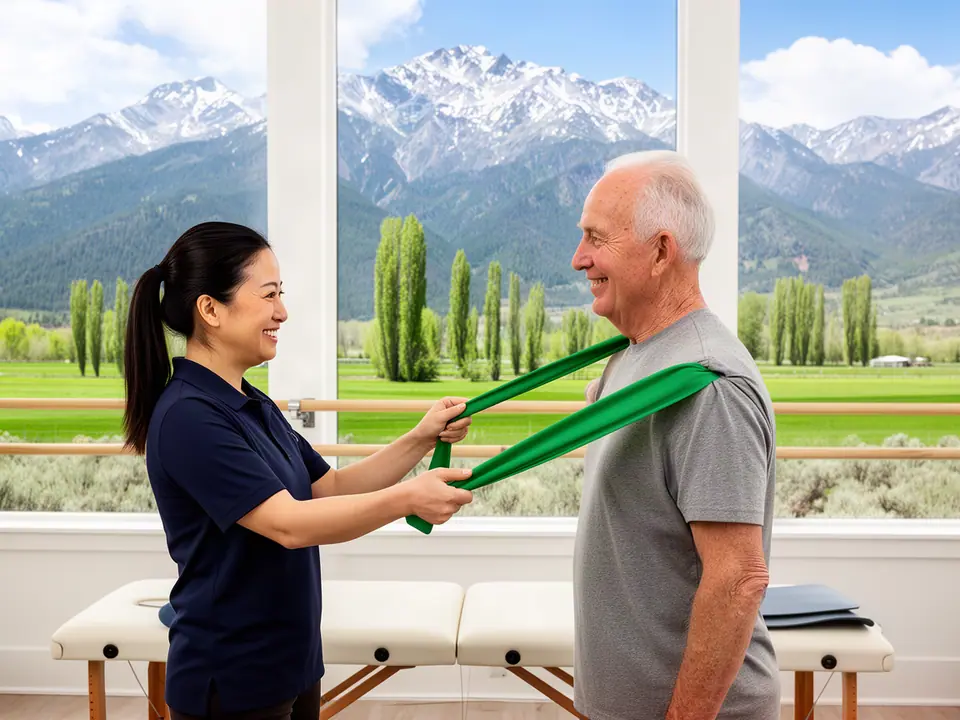
Treatment tables, parallel bars, treadmills and anti-gravity systems, ultrasound and stimulation units, and rehab gym equipment are the usual list. A small business loan for a physical therapy clinic is often an equipment agreement for the gym plus working capital for the first months of a new location, when visits ramp up before insurance payments catch up.
Optometry practice loans
Optometry practices run two businesses: the exam lanes, with phoropters, slit lamps, retinal cameras and OCT, and the optical shop, with frames and lenses bought ahead of sales. Equipment financing fits the lanes; inventory or a line of credit fits the optical stock. Keep the two sides separate in the figures you share, because partners read them differently.
Insurance lag and working capital
Insurance claims pay weeks after the visit, and denials and resubmissions stretch that further. A practice adding a provider pays the new salary immediately and collects on the new visits later. Business loans for a physical therapy practice or a chiropractic office in that position are usually working capital sized to the gap, not long-term debt.
A labeled example: adding a second therapist
Illustration only, with invented figures. A two-therapist PT clinic adds a third. The new therapist's pay and payroll costs run $7,500 a month. Visits ramp up over three months, and insurance pays about 40 days after each visit. In the first two months, the clinic pays about $15,000 in new wages and collects perhaps $4,000 from the new caseload. A working capital draw of roughly $11,000 to $14,000 covers the ramp; in this sketch the new caseload's collections carry the salary by month four.
Second locations and build-outs
A second clinic means a lease, a build-out and equipment before the first patient. A term loan covers the build-out, while equipment financing covers the tables and imaging. Partners want the first clinic's collections, the lease and the budget. Check permit and zoning steps for the space early with the Cache County and Logan, UT permits guide.
Cash-pay plans and memberships
Some chiropractic and therapy clinics run cash-pay visits or monthly membership plans alongside insurance. Membership income arrives on a predictable schedule, which partners can read in deposits, and it shortens the wait that insurance billing creates. A clinic moving toward memberships may need working capital while patients switch over, because insurance collections for earlier visits are still arriving and membership income is still building.
If your clinic has both, show them separately in what you bring: insurance collections with an aging summary, and membership or cash-pay income from the payment processor. Two clear streams are easier for a partner to judge than one blended total.
Cache County, UT practitioners: what CBP and NES count
County Business Patterns counted 146 offices of other health practitioners with employees in Cache County in 2023, with 561 employees and about $17.5 million in payroll. Three in four, 109 offices, had under five on staff. ZIP 84321 held 42 (ZBP 2023).
Nonemployer Statistics counted 226 practitioner businesses with no paid staff in 2024 (NAICS 2022 code 6213). Those two Census programs measure different groups, so the counts stay apart. See also physician practices and dental practices, or the Logan, UT business page for county data.
By our arithmetic, the 146 practitioner offices averaged 3.8 employees and about $31,100 of payroll per employee in 2023 (CBP). Dividing Nonemployer Statistics receipts by its business count gives about $45,700 per no-payroll practitioner in 2024 (our arithmetic), a separate program.
A small business loan for a physical therapy clinic: the build-out budget lines
A clinic budget that a partner can read lists each cost with its own quote. For a new or expanded physical therapy or chiropractic space, that usually means:
- Construction: walls, flooring, accessible restrooms, lighting and any plumbing for hydrotherapy or sinks.
- Treatment equipment: tables, decompression or traction units, modalities, parallel bars, a treadmill or bike.
- Gym equipment and rubber flooring for the open treatment area.
- Front desk, scheduling and documentation software, with setup fees.
- Signage, furniture and the first months of rent if the lease starts before patients do.
- Working capital for wages while the new schedule fills.
Equipment lines often go to equipment financing, construction and soft costs to a term loan, and the ramp-up wages to working capital or a line. Listing them separately lets the partner match each to a structure.
What partners commonly review for a Cache Valley, UT therapy or chiropractic practice
- Collections reports and an insurance aging summary
- Bank statements and the latest tax returns
- Equipment quotes with install costs broken out
- Lease and build-out budget, for a new location
- Professional licenses for the practitioners
Business loans for chiropractors and business loans for physical therapy practices are reviewed on these records; partners do not publish approval thresholds.